Echo
Grade: 90%
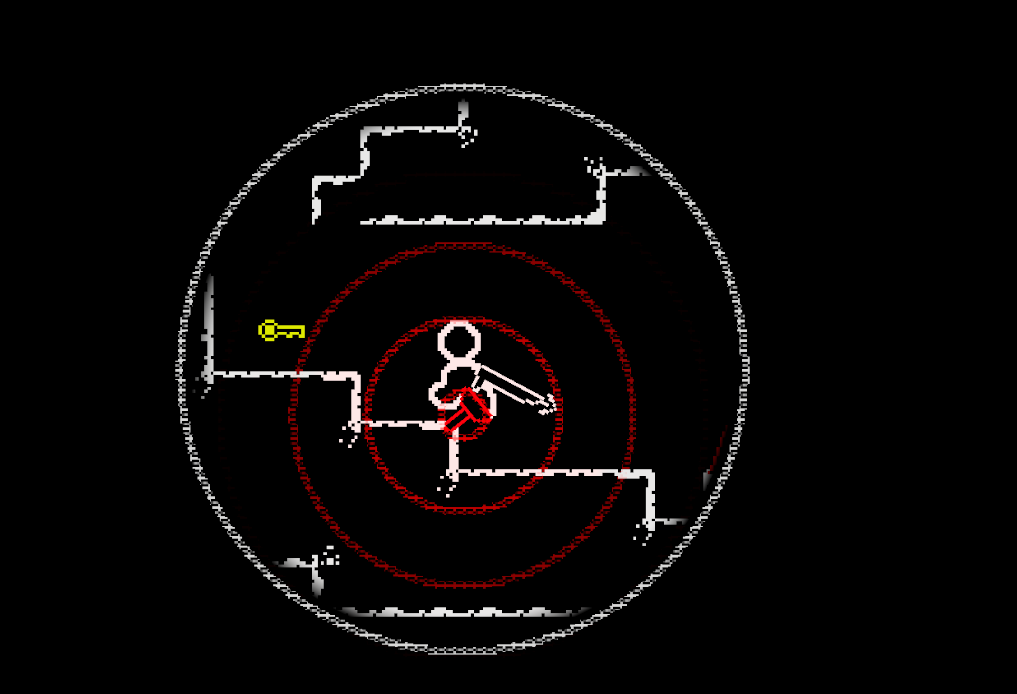
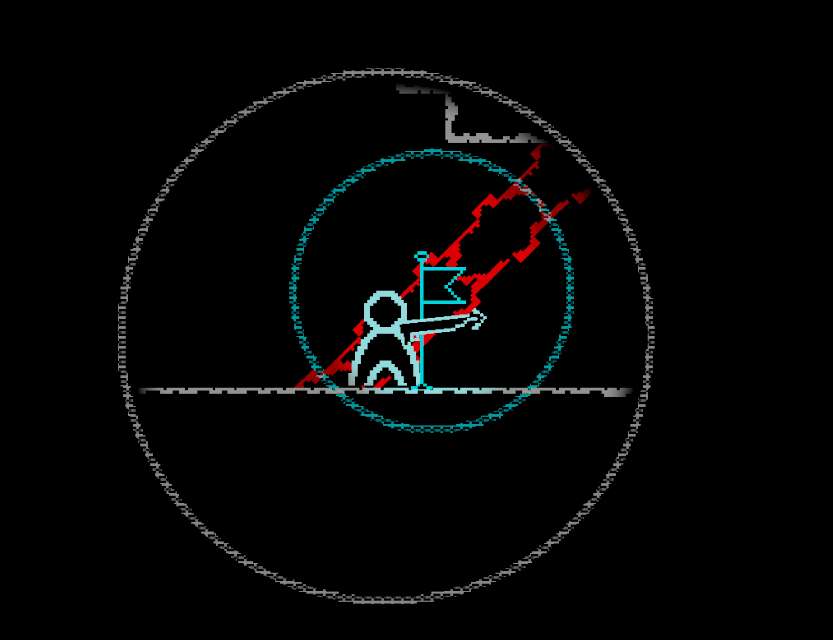
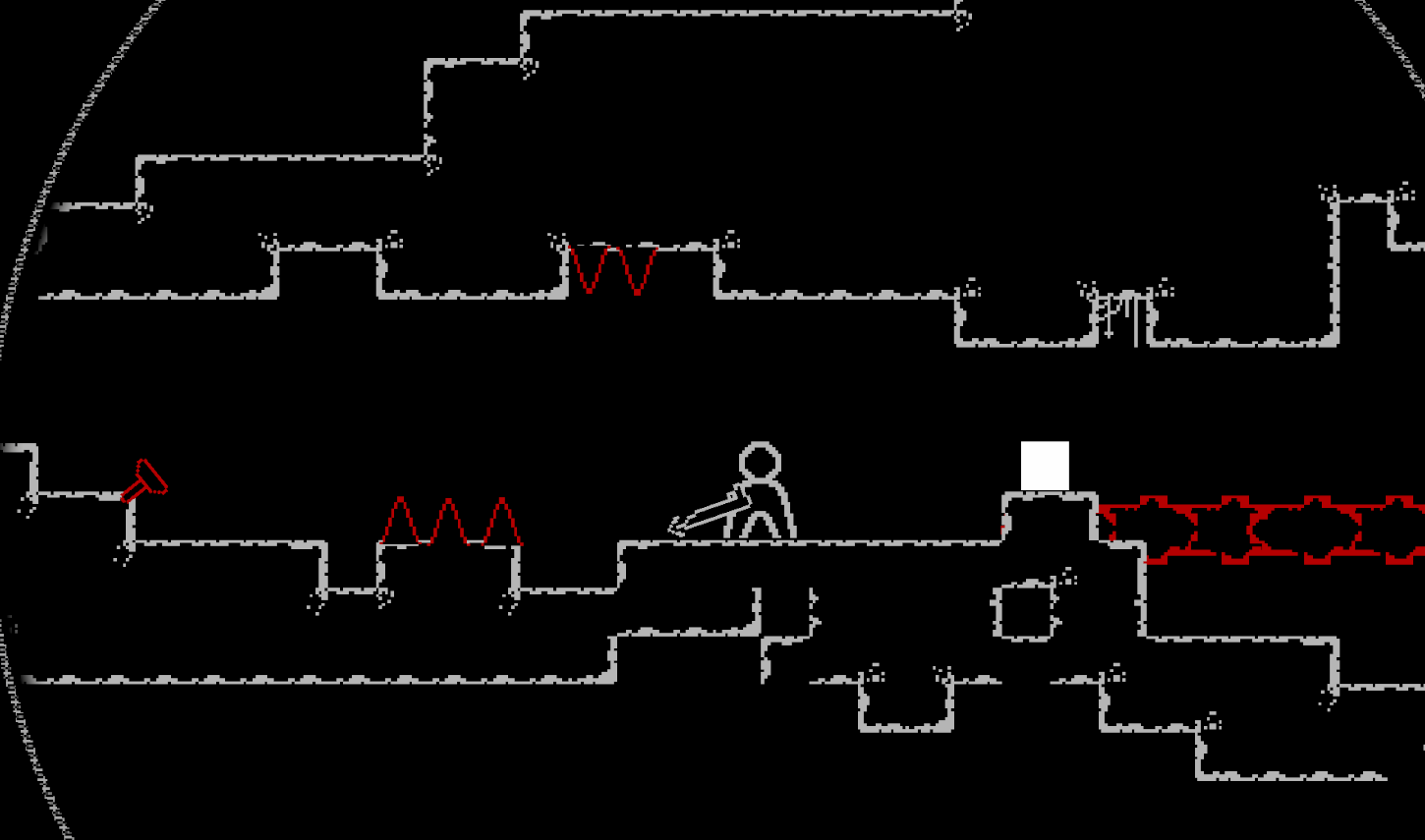
Project Overview: Echo is a sensory-driven puzzle platformer built around the concept of acoustic visualization. In a pitch-black environment, players must use echolocation to navigate and survive. The project focus was on developing a custom rendering pipeline for the “ping” effect and a high-fidelity character controller.
Technical Highlights
Acoustic Visualization Shader Pipeline
Multi-Pass Shader Effects: Engineered a custom shader system combining a Dithered Circular Expansion effect with a Depth-based Outline Pass. This simulates sound waves hitting geometry in a purely black environment.
Script-to-Shader Synchronization: Developed a C# controller to pass real-time position and expansion variables to the GPU, allowing for dynamic, timed “pings” that reveal the world based on player actions.
Selective Tile Interaction: Extended the Unity Rule Tile system with a custom scriptable layer that toggles shader reactivity. This allows specific environment types (e.g, non-grappable green zones) to remain visually distinct during pings.
High-Fidelity Platformer Controller
Tactile “Juice” Implementation: Built a 2D controller from the ground up focusing on professional “game feel.” Key features include:
Temporal Forgiveness: Jump Buffering and Coyote Time.
Air Control Logic: Anti-Gravity Apex and Speed Apex modifiers for fluid platforming.
Collision Polishing: Corner Clipping Correction and “Bumped Head” logic to prevent momentum loss on geometry edges.
Physics-Driven Grappling: Implemented a dual-purpose grapple system using Vector physics to either pull external objects toward the player or propel the player toward anchored geometry.
Sound-Reactive AI (The Centipede)
Acoustic Sensing Model: Developed an AI agent that “hears” the environment. It calculates aggression levels based on the distance and amplitude of player-generated pings.
Heuristic State Machine: Architected a Finite State Machine (FSM) with 5 distinct states (Wander, Sleep, Explore, Aggressive, Attack). The AI uses a proximity-based weighted system to transition between searching for the player and active pursuit.
Modern UI Architecture Data-Driven UI Toolkit: Leveraged Unity’s UI Toolkit (USS/UXML) to create a decoupled UI system.
Dynamic Content Scaling: Built a level-select menu that procedurally generates and scales UI elements based on the assigned level count, ensuring a scalable and maintainable front-end.
Gameplay Screenshots